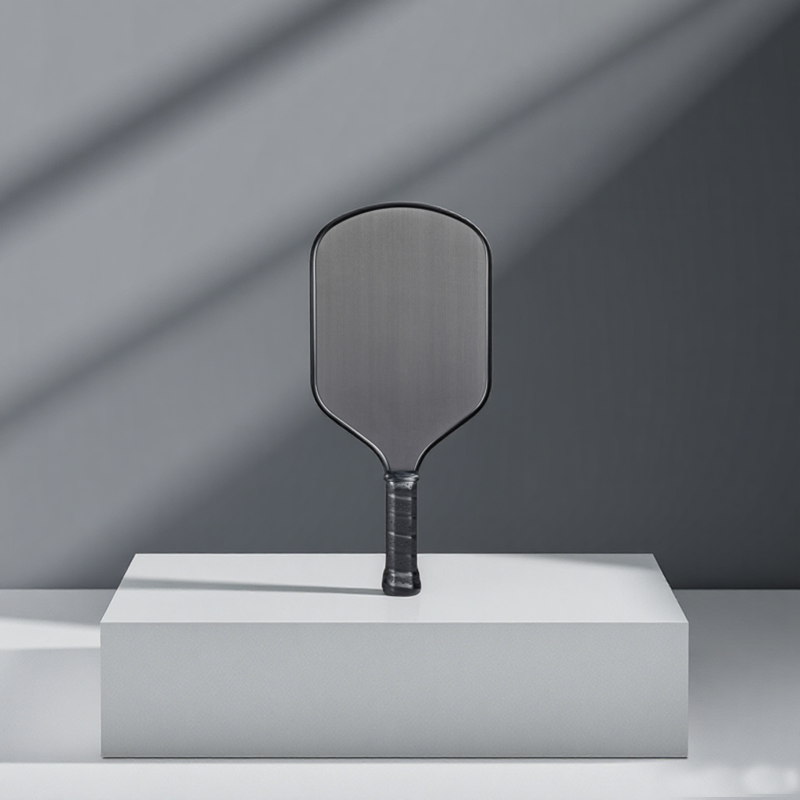
The main material for producing high-quality carbon fiber pickleball paddles is carbon fiber, which is renowned for its high strength-to-weight ratio (i.e., achieving lightness while maintaining high strength). Typically, high-grade carbon fibers are preferred for pickleball paddles, such as 's T300 or T700 series. These carbon fiber precursor materials are usually polyacrylonitrile (PAN). First, the PAN fibers undergo treatment and heating. During this process, the molecules within the PAN fibers begin to align. Carbonization is then carried out in a high-temperature, oxygen-free environment (to avoid combustion), ultimately forming extremely fine yet highly strong carbon fiber filaments. Each filament typically has a diameter of 5-10 microns, much thinner than a human hair. These individual carbon fiber filaments are then bundled together to form "tows." Common tow specifications include 3k (3,000 filaments), 6k (6,000 filaments), and 12k (12,000 filaments).
After production, carbon fibers are woven into fabrics. The weaving method of carbon fiber fabrics has a significant impact on the final performance of the pickleball paddle. Several main weaving methods used in pickleball paddle production include: Plain weave: This is a simple and common weaving method where carbon fibers interlace over and under each other (one over, one under). It provides good balance and is relatively easy to produce. Twill weave: In twill weaving, fibers form a diagonal pattern. Twill-woven carbon fiber fabrics are typically used for the paddle face as they offer enhanced power and control. Satin weave: Satin weaves, such as 4-harness satin (4HS), 5-harness satin (5HS), and 8-harness satin (8HS), have high formability and can be easily shaped around curved surfaces. They are usually used for the edges of the paddle to achieve better molding results. Paddle manufacturers select the appropriate weaving method based on the performance characteristics required for the final product, such as power and ball control.
After weaving, the carbon fiber fabrics need to be impregnated with resin to form so-called carbon fiber prepregs. This process involves immersing the carbon fiber fabrics in epoxy resin. The amount of impregnated resin is precisely controlled to ensure the proper balance of performance. After impregnation, the carbon fiber prepregs are moderately dried to remove excess solvent and reach the required consistency for further processing. Epoxy resin is a common choice due to its excellent adhesive properties and its ability to impart stiffness and durability to the final composite material.
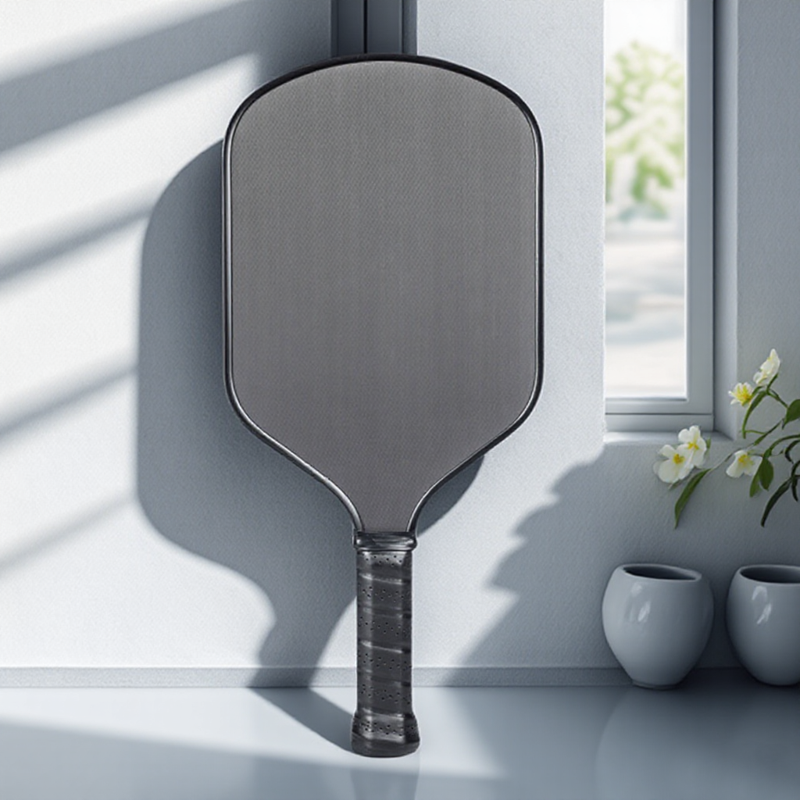
The structure of a carbon fiber pickleball paddle typically follows a sandwich design. First, the base layer is set up. This starts with thoroughly cleaning the mold to ensure a smooth paddle face. Then, a release agent is applied to the mold to prevent the paddle from sticking during the curing process. After that, the first layer of carbon fiber cloth (prepreg) is laid in the mold. Additional layers of carbon fiber prepregs are then added, each with a specific function. For example, in some designs, layers with different fiber orientations may be used to enhance the strength of the paddle in different directions.
After arranging the carbon fiber layers and core material in the mold, resin is applied. This can be done by first applying resin to the mold and then placing the carbon fiber and core material on top, or by applying resin to the stacked layers. The key is to ensure that the resin evenly penetrates all layers and bonds them firmly together.
Once the resin application is complete, the mold is closed, and the curing process begins. There are two main curing methods: cold press molding and thermoplastic molding/integral molding. During the curing process, parameters such as curing time, temperature, and pressure need to be precisely controlled.
After the curing process is completed and the paddle is shaped, surface treatment and finishing steps are carried out:
Trimming and sanding: First, the paddle is trimmed to remove excess material from the edges. Then, sanding is performed to achieve a smooth surface. Preliminary sanding prepares the surface for subsequent treatments.
Primer coating: A primer is applied to the paddle surface, usually an ultraviolet (UV)-resistant epoxy primer. This primer not only provides a base for subsequent coatings but also offers UV protection, as UV rays can degrade carbon fiber over time. High-quality UV-resistant epoxy primers can withstand up to 500 hours of sunlight without significant yellowing.
Topcoat application: A topcoat is applied to enhance durability and performance. Some high-end paddles use a nano-diamond particle coating. This coating can significantly increase surface hardness, reaching a 9H rating on the Mohs hardness scale, and improves scratch resistance by 300%.
Surface texturing (optional): Some pickleball paddles undergo surface texturing to provide better grip and spin effects. This can be achieved through various methods, such as using special texture sprays or retaining a rough surface during manufacturing. However, the surface roughness of the paddle is regulated by organizations like the USAPA (USA Pickleball Association) to ensure that the paddle does not generate excessive spin, maintaining a fair competitive environment for all players.
Before carbon fiber pickleball paddles are released to the market, they undergo strict quality control and testing procedures:
Visual inspection: The paddle is visually inspected for visible defects such as cracks, bubbles, or surface irregularities. Even the smallest flaws can affect the paddle's performance and durability.
Performance testing: Various performance parameters of the paddle are tested. This includes testing the sweet spot (the area on the paddle that provides the best combination of power and control when hitting the ball), the amount of spin generated, and the overall balance of the paddle. Mechanical testing machines can be used to simulate the impact of balls hitting the paddle at different speeds and angles, ensuring that the paddle can withstand the forces exerted during normal gameplay.
Compliance testing: The paddle must meet the standards set by relevant sports organizations (such as the USAPA). These standards cover aspects such as paddle size, weight, and surface roughness. Only paddles that pass all these tests are considered suitable for use in official competitions and receive approval for sale.