When you request a quote from a custom pickleball paddles manufacturer or a pickleball paddle OEM China factory, the pricing can seem opaque. Why does one factory quote $12 per paddle while another quotes $22 for a seemingly similar product? Understanding the pickleball paddle manufacturing cost breakdown helps you negotiate better, choose the right supplier, and set profitable retail prices. This guide breaks down every cost component — materials, labor, tooling, testing, packaging, and overhead — and explains how factors like order volume, customization level, and quality standards affect pickleball paddle OEM pricing. Whether you are sourcing private label or full OEM, this cost transparency will make you a smarter buyer.
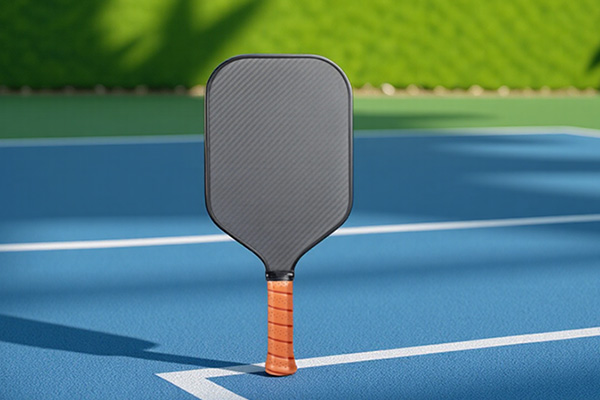
Pickleball paddle wholesale cost from Chinese factories is typically quoted FOB (Free on Board) China port. This price includes the paddle, standard packaging, and factory profit, but excludes international shipping, insurance, customs duties, and your brand-specific marketing costs. A typical FOB price range for finished paddles is:
Entry-level (fiberglass face, poly core, basic grip): $6–$11 per paddle
Mid-tier (carbon fiber face, 16mm core, perforated grip): $11–$18 per paddle
Premium (raw carbon fiber, thermoformed unibody, high-end grip): $18–$30 per paddle
These are factory prices for orders of 500–2,000 units. Lower MOQ (100–300 units) adds 20–50% to per-unit cost. Higher volumes (5,000+) reduce cost by 10–30%.
Below, we dissect what makes up these FOB figures.
Materials account for 50–65% of total FOB cost. The main materials are core, face sheets, edge guard, grip, and adhesives.
Polypropylene honeycomb is used in over 90% of paddles. Cost depends on thickness and cell size:
13mm core: $1.50–$2.00 per paddle
16mm core: $2.00–$2.80
20mm core: $2.80–$4.00
Nomex or aluminum cores: $3.00–$6.00 (rare)
This is the most variable material cost:
Fiberglass (woven, 0.5–1.0mm thickness): $1.00–$2.50
Coated carbon fiber (3K weave, standard resin): $3.50–$6.00
Raw carbon fiber (3K, uncoated): $5.00–$8.00
Raw carbon fiber (12K, premium): $7.00–$11.00
Kevlar or hybrid: $8.00–$15.00
Most paddles use two face sheets (one on each side), so double these costs for the paddle.
PVC edge guard: $0.50–$1.00
TPU (thermoplastic polyurethane): $1.00–$1.80
Thermoformed paddles: $0 (integrated)
PU perforated grip wrap (with adhesive backing): $0.80–$1.50
Synthetic leather grip: $0.60–$1.20
Tacky rubber grip (TPE): $1.20–$2.00
Butt cap (plastic): $0.10–$0.30
Handle foam core: $0.20–$0.50
Adhesive for core-to-face bonding: $0.20–$0.50
Edge guard adhesive: $0.10–$0.30
Finishing tape: $0.05–$0.10
Individual poly bag or box: $0.30–$1.00 (basic box)
Custom printed box: $1.00–$2.50 (MOQ 500+)
Mid-tier paddle (coated carbon face, 16mm poly core, PVC guard, PU grip): Core $2.50 + faces (2 × $4.50 = $9) + edge guard $0.80 + grip $1.00 + adhesives/tape/box $0.80 = $14.10 in materials per paddle. That's before labor, overhead, and profit.
A premium raw carbon thermoformed paddle (16mm core, raw 3K faces, integrated edge): Core $2.50 + raw carbon faces (2 × $6.00 = $12) + thermoforming adhesive system $0.50 + grip $1.20 + packaging $1.00 = $17.20 materials. Lower material cost than some might expect because no edge guard is needed.
Labor costs in China have risen but remain competitive. For paddle manufacturing, labor includes:
Core cutting and preparation
Face sheet layup and adhesive application
Pressing operation (hot press or thermoforming)
Edge guard attachment (for bonded paddles)
Grip wrapping and finishing
Quality control checks
Packaging and carton loading
Labor cost per paddle: $1.50–$4.00 depending on complexity. Thermoformed paddles require more skilled labor and longer press cycles, adding $1.00–$2.00 compared to bonded paddles. Automated lines reduce labor but require high volume (10,000+ units).
For full custom projects (new shape, new mold), you pay for tooling. Molds are typically amortized over the production run. Costs:
Simple bonded paddle mold (aluminum): $500–$1,500
Complex thermoforming mold (steel, precision): $2,000–$5,000
Butt cap mold (if custom shape): $300–$800
Amortization example: $1,500 mold cost over 1,000 units = $1.50 per paddle. Over 500 units = $3.00 per paddle. Higher MOQ reduces per-unit tooling cost.
For ODM (private label using existing molds), no tooling fee is charged, but the per-unit price includes the factory's cost recovery for their original molds.
Factories add overhead (rent, utilities, equipment depreciation, management, sales) and profit margin, typically 15–25% of total cost. For a paddle with $14 materials + $2 labor = $16 subtotal, overhead+profit adds $2.40–$5.30, resulting in FOB $18.40–$21.30.
Additional fees that may appear in quotes:
Certification testing (USAPA, etc.) – $500–$1,500 per model, amortized
Sample fees – usually $50–$150 per paddle, often refundable
Graphic setup (sublimation or screen print) – $50–$300 one-time
Volume discounts are substantial. Below is a realistic example for a mid-tier coated carbon fiber paddle:
| Order Quantity | Per-Unit FOB Cost | Total Cost | Savings vs 200 pcs |
|---|---|---|---|
| 200 units | $21.00 | $4,200 | – |
| 500 units | $16.50 | $8,250 | 21% lower per unit |
| 1,000 units | $14.00 | $14,000 | 33% lower |
| 3,000 units | $12.20 | $36,600 | 42% lower |
Lower volume penalizes per-unit cost because fixed costs (setup, QC, paperwork) are spread over fewer units. For first orders, 300–500 units is a reasonable balance.
Different levels of customization add cost:
Stock / white label: No customization – lowest cost ($1–2 less per paddle than private label).
Private label (logo only, screen print): Add $0.50–$1.50 setup + $0.30–$0.80 per paddle.
Private label (full sublimation graphics): Add $150–$300 setup + $1.00–$2.50 per paddle.
Semi-custom (choose core thickness, face material from factory options): Minimal or no add.
Full OEM (new shape, custom mold, proprietary panel layup): Add tooling ($1,000–$5,000 amortized) + 10–20% higher per-unit cost for unique processes.
Choose the level that matches your brand stage. Starting with private label on an existing mold is most cost-effective.
Your FOB price is just the start. To get paddles to your warehouse, add:
International freight (sea or air): Sea LCL for 500 paddles ~$500–$1,500; air freight ~$2,000–$5,000.
Marine insurance: ~0.3–0.5% of cargo value.
Customs duties (US): 7.5–15% depending on HS code (9506.99) and country of origin.
Customs broker fees: $150–$300 per shipment.
Local delivery (port to warehouse): $200–$500.
Total landed cost = FOB + freight + duties + fees. For a $15 FOB paddle, landed might be $20–$25.
Also budget for: marketing, packaging design, photography, storage, fulfillment.
To reduce pickleball paddle OEM pricing while maintaining standards:
Increase order quantity – combine multiple SKUs into one order to reach higher volume tiers.
Choose an existing mold (ODM) – avoid tooling fees.
Simplify graphics – 2-color screen print instead of full sublimation.
Use standard packaging – plain box with a sticker, instead of custom printed box.
Accept longer lead times – slower sea freight (consolidated LCL) costs less than expedited.
Ship to a port near you – avoid inland freight from distant ports.
Consolidate orders with other brands (rare, but possible via sourcing agent).
Negotiate payment terms – larger deposit (e.g., 50% vs 30%) may reduce price slightly.
Always keep quality as the priority. Saving $1 per paddle is worthless if defect rates double.
Scenario: A brand wants 1,000 units of a 16mm carbon fiber paddle, custom logo, standard edge guard, PU grip.
Factory A (low-cost, minimal QC): FOB $11.50 per paddle. Total $11,500. Risk: higher defect rate, poor edge guard adhesion.
Factory B (mid-range, ISO certified): FOB $14.20 per paddle. Total $14,200. Includes pre-shipment inspection and 12-month factory warranty.
Factory C (premium, thermoformed capability): FOB $19.80 per paddle. Total $19,800. Raw carbon face, unibody – higher performance, lower warranty risk.
The brand chose Factory B for balance of cost and quality. Over 12 months, they had a 2.5% defect rate, replaced 25 paddles, costing about $355 in replacement product + shipping. If they had chosen Factory A (estimated 8% defect rate), replacement cost would be ~$920 plus higher customer dissatisfaction. The $2.70 per unit savings wasn't worth the risk.
This illustrates that the cheapest quote is rarely the best total cost.
Use your understanding of pickleball paddle manufacturing cost breakdown to negotiate effectively:
Ask for a detailed cost breakdown (materials, labor, tooling, profit). Factories may not share fully, but requesting shows you are informed.
Offer a longer-term commitment (e.g., 2 orders of 1,000 units over 6 months) in exchange for a 5–10% discount.
Agree to a rolling forecast to help the factory plan material purchases – they may reduce price.
Pay via T/T (bank wire) – avoid credit card fees. Ask for discount if you pay 50% deposit instead of 30%.
Combine multiple paddle models (e.g., 500 of Model A + 500 of Model B) to reach 1,000-unit pricing.
Request over-shipment (e.g., 1% free units) to cover potential claims.
A good custom pickleball paddles manufacturer will work with you, especially for repeat orders.
Several factors may affect future pickleball paddle wholesale cost:
Raw material inflation: Carbon fiber prices have fluctuated. Polypropylene is petrochemical-based, sensitive to oil prices.
Labor costs in China: Rising 5–10% annually, though automation may offset.
Tariffs: Section 301 tariffs on Chinese goods (7.5–15%) have been extended; monitor policy changes.
Thermoforming adoption: As more factories invest in thermoforming presses, costs may decrease, making premium construction more accessible.
Eco-materials: Recycled cores and bio-resins may become cost-competitive with virgin materials in 3–5 years.
Plan for 3–5% annual cost increases, and build margin flexibility into your retail pricing.
Understanding the pickleball paddle manufacturing cost breakdown empowers you to make informed sourcing decisions. Raw materials drive 50–65% of FOB cost, followed by labor, tooling, and overhead. Volume, customization level, and factory quality systems significantly impact pickleball paddle OEM pricing. When evaluating quotes from a custom pickleball paddles manufacturer or a pickleball paddle OEM China partner, look beyond per-unit price – consider defect rates, warranty support, and communication reliability. Use the cost levers discussed (MOQ, existing molds, simplified graphics, consolidated shipping) to optimize your total landed cost without compromising quality. With transparent cost analysis, you can price your paddles competitively, maintain healthy margins, and build a sustainable brand.
Ready to get accurate, fair quotes for your paddle line? Our sourcing team helps you compare factory pricing, negotiate terms, and understand total landed cost. Contact us for a free consultation.
For 500–1,000 units, expect $12–$18 FOB China per paddle. That includes poly core, carbon fiber face, standard edge guard, and PU grip. Lower volumes (100–300 units) cost $18–$25.
Simple screen-printed logo: $0.30–$0.80 per paddle plus $30–$60 setup. Full-face sublimation: $1.00–$2.50 per paddle plus $150–$300 setup.
Thermoforming requires more expensive molds ($2,000–$5,000 vs $500–$1,500 for bonded molds), longer press cycles, and higher-grade materials (raw carbon). The per-unit FOB cost is typically $5–$10 higher than comparable bonded paddles.
Increase order volume, simplify packaging, use an existing ODM mold, and consolidate shipping. Avoid cutting material quality or skipping QC inspections – that leads to higher long-term costs.
FOB (Free on Board) price includes all factory costs: materials, labor, overhead, profit, packaging, and loading onto vessel at the named port (e.g., FOB Shanghai). It excludes international freight, insurance, and destination charges.
Be cautious. Extremely low prices ($8–$10 FOB for a carbon fiber paddle) often indicate recycled cores, thin face sheets, weak adhesives, or poor QC. Low initial price may lead to high return rates and brand damage.
Typically the factory quotes a per-unit price that includes a portion of the mold cost, or they charge the mold fee separately. For 1,000 units, $1,500 mold adds $1.50 per paddle. For 500 units, it adds $3.00. Ask for a separate mold invoice if you want to own the mold.
30% deposit by T/T to start production, 70% balance against copy of Bill of Lading or after pre-shipment inspection. Some factories ask 50% deposit for first orders. Negotiate to keep final payment leverage until after QC.
Ask: Are export documentation fees included? Is there a charge for bank transfer? What about inspection fees for third-party visits? Is mold maintenance amortized separately? A transparent factory will answer.
For sea freight, shipping adds $1–$4 per paddle depending on volume and destination. For air freight, adds $5–$12 per paddle. Plus customs duties (5–15%) and broker fees ($150–$300). Total landed cost is often 20–40% higher than FOB.